At a Glance
- Movement: Regular exercise is linked to lower psoriasis severity and helps manage comorbidities like obesity and heart disease. The strongest trial paired exercise with weight loss, so effects vary between individuals.
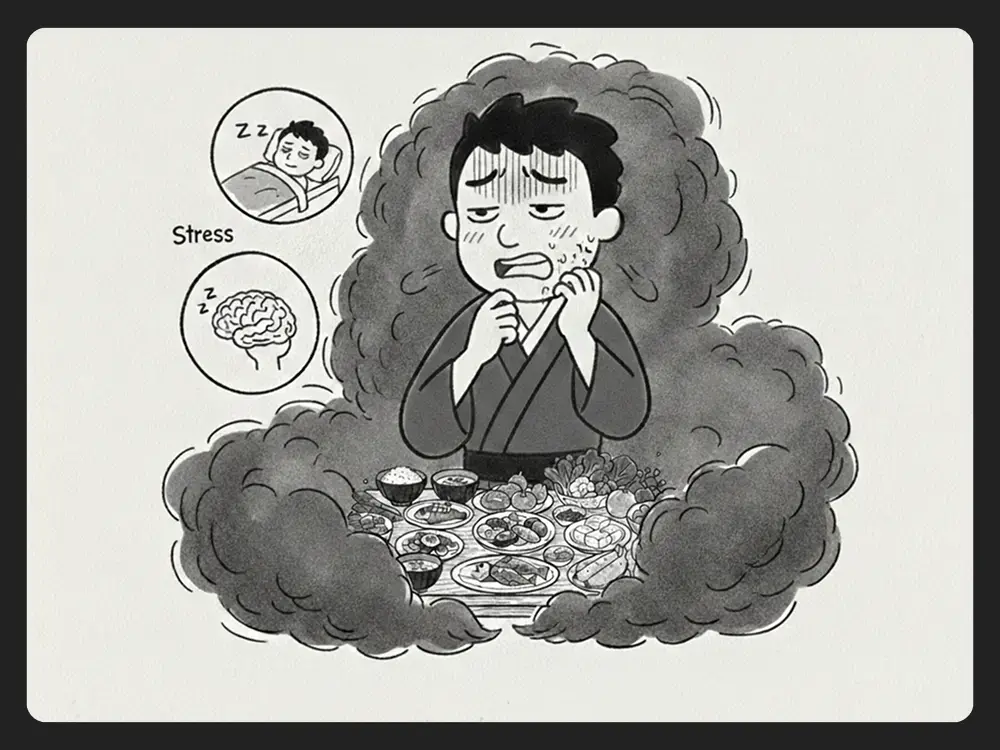
- Sleep: Poor sleep raises inflammatory markers such as TNF-alpha and IL-1beta and is common in severe psoriasis. Sleep is covered in depth on the mind-skin page.
- Stress: Chronic stress activates the HPA axis, raising cortisol and precipitating flares in up to 40% of cases. Movement, mindfulness, and CBT help break this cycle.
Does Exercise Help Psoriasis?
Regular physical activity is one of the lifestyle factors most consistently associated with milder psoriasis. People with psoriasis tend to be less physically active than those without it (Zheng et al., 2018), and a 2024 meta-analysis found that high-intensity exercise in particular is significantly less common among patients, while pooled data showed PASI scores fell significantly after exercise interventions (Zhu et al., 2024). Exercise is also thought to lower systemic pro-inflammatory activity and helps manage comorbidities such as obesity and cardiovascular disease, which are disproportionately common in people with psoriasis. A 2022 review of the field notes the same sedentary pattern and points to real barriers behind it, from plaque discomfort to self-consciousness about exercising in public (Yeroushalmi et al., 2022).
What the trials show: The strongest evidence comes from a randomised controlled trial of 303 overweight or obese patients, where a 20-week programme combining exercise with a weight-loss diet reduced PASI scores by a median of 48%, compared with 25.5% in the control group (Naldi et al., 2014). Because that programme paired exercise with weight loss, it is not possible to separate the effect of exercise alone from the effect of losing weight. A smaller 2024 study of a structured walking programme also found significant PASI reductions over 20 weeks (Sheppard et al., 2024), though it was small and uncontrolled. The honest summary is that movement is consistently linked to better outcomes, but how much comes from exercise itself versus accompanying weight change is still uncertain, and the response varies between individuals.
Here is that headline trial at a glance:
One trial did manage to separate exercise from diet, and here is what it found:
That walking programme is the study that asks most directly whether movement can clear skin in people who already have psoriasis. It is small and has no comparison group, so read it as a promising signal rather than proof:
Exercise may also help prevent psoriasis from developing in the first place. In the Nurses' Health Study II, which followed more than 86,000 women who did not have psoriasis at the start, those in the most vigorous exercise group had roughly a 25 to 30 percent lower risk of later developing the condition than the least active (Frankel et al., 2012). The benefit was specific to vigorous activity such as running and aerobic exercise, and walking alone showed no measurable effect on risk. Preventing psoriasis is a different question from treating it once present, so this sits alongside the walking-programme finding above rather than against it. Taken together, they point to intensity being part of what matters, which the 2024 meta-analysis also found.
That prevention signal, in more detail:
Zooming out, the gold-standard review that pooled these lifestyle trials is measured about it:
While the gut-skin connection manages dietary triggers and the mind-skin connection manages stress and sleep, physical movement adds another lever for inflammatory control. Optimising one pillar while neglecting the others tends to limit results.
How Do Sleep and Stress Fit In?
Sleep and stress are both genuine influences on psoriasis, and they interact closely with movement. Poor sleep raises inflammatory markers such as TNF-alpha and IL-1beta, and chronic stress raises cortisol through the HPA (Hypothalamic-Pituitary-Adrenal) axis, which can precipitate flares in up to 40% of cases. The encouraging part is that these pillars reinforce one another: movement reduces stress, which improves sleep, which lowers inflammation. We cover the sleep and stress side in depth on the mind-skin connection page, including how to stop psoriasis from disrupting your sleep.
For trigger tracking, the practical point is that sleep and stress must be logged alongside skin photos. A poor night or a high-stress week produces noisy data that can mask or mimic the effect of exercise or diet, so recording them is what keeps your results readable.
Can Stress Trigger Psoriasis Flares?
Yes. Chronic stress raises cortisol levels, which can precipitate psoriasis flares in up to 40% of cases, disrupting the body's immune balance through HPA axis dysregulation and compounding the effects of poor sleep and reduced movement.
A unified approach: Integrating mindfulness, regular movement, and Cognitive Behavioural Therapy (CBT) is often the missing piece in breaking the cycle of chronic flares. The system is interconnected, and gains in one area reinforce gains in the others.
Browse all body & movement studies →
References
- 1. Naldi L, et al. Diet and physical exercise in psoriasis: a randomized controlled trial. British Journal of Dermatology, 2014. PubMed 24641585
- 2. Sheppard, et al. Increased physical activity promotes skin clearance in patients with psoriasis. Skin Health and Disease, 2024. PMC11442072
- 3. Frankel HC, et al. The association between physical activity and the risk of incident psoriasis. Archives of Dermatology, 2012. PubMed 22911187
- 4. Zhu H, et al. Association of psoriasis disease with physical activity and exercise: systematic review and meta-analysis. Advances in Dermatology and Allergology, 2024. doi:10.5114/ada.2024.143424
- 5. Zheng Q, et al. Association between physical activity and risk of prevalent psoriasis: a meta-analysis. Medicine (Baltimore), 2018. PMC6076093
- 6. Diaz AJ, et al. Regular exercise improved fatigue and musculoskeletal pain in young adult psoriatic patients without psoriatic arthritis. Nutrients, 2023. PubMed 37960216
- 7. Ko SH, Chi CC, et al. Lifestyle changes for treating psoriasis. Cochrane Database of Systematic Reviews, 2019. PubMed 31309536
- 8. Yeroushalmi S, et al. Psoriasis and exercise: a review. Psoriasis: Targets and Therapy, 2022. PubMed 35813078
- 9. Sleep disturbance and PASI correlation in severe psoriasis. PMC11333390
- 10. HPA axis, stress and psoriasis flare mechanisms. PMC8965012